Two ads for composers trying to break in.
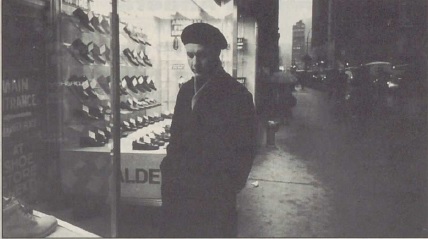
Ed Tomney
Ed Tomney
Not many composers can boast of having had musical installations in museums, but that's just one facet of Ed Tomney 's eclectic career. After working on more than 30 soundtracks, he's gained attention for his unique stamp on such soundtracks as David Lynch's "American Chronicles," Tamra Davis' cult classic "Guncrazy" and "Safe," Todd Haynes' brilliant, disturbing follow-up to "Poison."
In earlier career incarnations, Tomney studied woodwinds and composition. He later formed the art-rock band The Necessaries, which was discovered and produced by the legendary John Cale of Velvet Underground fame. Tomney then went on to form the experimental Industrial Orchestra, a 15-piece group made up of computer-controlled electric guitars (as well as live musicians) who performed in front of large audiences at galleries, theater spaces and clubs across the country.
Tomneny's signature style involves a seamless blend of Eastern and Western influences and sound collage, incorporating spoken word, sampled sounds, electric and acoustic music. He says he enjoys collaborating with directors. "Each film is a specific cuisine, so to speak, and I try to make it special by addressing issues inside the story, really getting inside of the director's vision."
He believes that film scoring involves two distinct parts. "The footage is very important because of the visual sensibility, the sense of color and the rhythm of the entire film. And then there's the cerebral part: the script. A score can make or break a film by helping the script along."
Tom Hiel
Tom Hiel's CD collection spans Stravinsky to John Coltrane; from the soundtracks of "Hoffa" and ' "Dracula" to the latest by avant/rap band Soul Coughing. Such an unusual collection is par for the course for Hiel, a transplanted Minnesotan who came to Los Angeles four years ago. A musical prodigy, Hiel began piano lessons at the age of 4 and was writing his own compositions by the age of 7. By 1 3, he'd completed his "Concerto in A Minor for Piano and Orchestra."
While a computer buff and mathematics major at the University of Minnesota, he began playing synthesizer and piano at coffeehouses and art galleries. Two recordings, "Please," a piano composition, and "Geometry," a synthesizer composition, were released by Echo Bay Music. After moving to LA, Hiel scored such award-winning short films as "Providence" and "The Silver Surfer," which led to the features "The Dark Side of Genius" and more recently, "Swimming with Sharks." Hiel com posed the "Sharks" score in a week and a half. "It was tough, but I liked the challenge," he says. "Basically, I didn't sleep much!"
He cites as inspiration the soundtracks to "Dr. Zhivago," "The Wild Bunch," and the more recent "Men Don't Leave." "I like to roll picture and play along with it, trying variations of riffs for different scenes, seeing whether strings will work with a certain score or how a minor version of the theme could sound."
Currently working on sketches for two upcoming features, Hiel says he likes the experimentation film scoring allows. "I had classical training, but at the same time, I was stealing my older brother's Deep Purple and Black Sabbath records. It might sound kind of weird, but I think it’s been good for film scoring.”