Jonathan Wolff and Dan Foliart discuss the importance of theme songs for television, against network executives who want to limit their airtime.
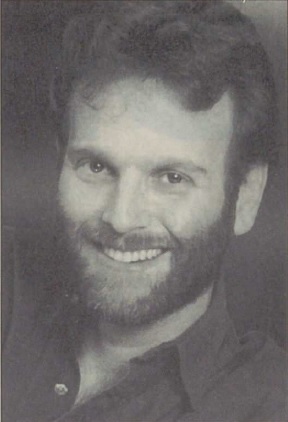
Jonathan Wolff
Just a year ago, network and studio executives were talking about dropping main-title sequences from new primetime series.
Television critics howled. Composers groused. Network execs, particularly those at ABC and NBC, defended their position as an attempt to preempt channel-surfing by jumping directly into program content (superimposing titles over the action in many cases).
Now, with the stunning commercial success of the theme for NBC's popular "Friends," everyone is taking a second look at the trend. Even ABC Entertainment President Ted Harbert has backtracked on his initial hard line against themes. "I think maybe I went a little further than I should have," Harbert admits. "There never was an absolute ban. What the policy was, and pretty much still is, is, let's not do these unless you really have a good idea for one. If you've got one that you want to come show us, that you really want to do, okay."
Jonathan Wolff ("Seinfeld"), whose music will accompany eight series on the air this fall, says, surprisingly, "Maybe Ted Harbert was right." Last year, a studio music executive asked the composer to accept a 1 fee to compose a series theme, which Wolff turned down. "It's no surprise that TV shows that are more concerned with cost than quality will have stupid theme music," he says.
To Wolff, the no-opening-titles policy "sent a clear message" to the music community: work harder to create better material. "TV viewers deserve good music," he says. "This year, people like Diane English ("Double Rush"), Tony Danza ("Hudson Street") and Fred Barron ("Caroline in the City"), all people who know the importance of music in a show, called me and said, 'They're not letting us put themes on.'" Veteran composer Jerry Goldsmith's majestic theme for UPN's "Star Trek: Voyager" runs an unheard-of 1 minute and 45 seconds.
Wolff s response: "How about if we create a theme and opening titles so good, of such great quality, so riveting and so inviting to the viewer, that the networks will have to say, 'Wow, we should show this'?" The net result has been better themes and better opening titles, he believes.
In the case of ABC's "Hudson Street," Danza actually sings Wolff's standard-style theme song over the titles. For NBC's "Caroline in the City," the Lea Thompson comedy about a cartoonist, Wolff will score different animated opening titles each week.
Composer Richard Bellis, an Emmy winner ("Stephen King's It") who is also president of the Society of Composers & Lyricists, shares Wolff's outlook, not only on the theme issue but on other composer concerns including reduced fees, music-credit issues and man dates to score with non-union musicians.
"We have come through a period where it seemed as if the industry was experimenting to see how little they could pay for music," he says. "It now appears as if they found out by taking packages and fees to such an all-time low that the product actually suffered; either because the only people who would accept the deal were inexperienced or the score sounded cheesy due to an insufficient budget."
The growing number of networks creating original programming, especially TV-movies, has led to what Bellis calls "entry-level production. This involves first-time writers, directors and producers, "significantly reducing the budget, including the money available for music, from the onset," he says.
Pointing out what can be achieved with the right resources, Bellis cites this year's Emmy nominees. "The care that goes into a production, i.e., time and money, shows up in the form of nominations," he says. "If you look, for instance, at the nominees in music for a miniseries or special, you will find that each score is primarily acoustic and was probably budgeted at $70,000 or more.
"No matter how creative the composer, if the music cannot be performed properly, either because of non-union mandates or inadequate funds, you will have a cheesy sounding score."
In fact, last season's most spectacular main title is widely recognized to be veteran film composer Jerry Goldsmith's majestic theme for UPN's "Star Trek: Voyager." It runs an unheard-of 1 minute and 45 seconds and is set to stunning visual effects. Both the music and title sequence are Emmy-nominated.
Weekly production schedules for series, governed by airdates, make it impractical to travel out-of-state to use non-American Federation of Musicians players, composers say. Also, scripts are rewritten daily, sometimes requiring last-minute music changes, so composers need to react quickly.
"This is certainly not an appropriate time for the inefficiency and 'nincompoopery' of a non-union recording session," says Wolff. "Hiring a composer under those conditions is the same as hiring an architect to design a house while insisting that the builder is unlicensed and the construction work ers be inexperienced."
Eyebrows were raised in the music community when Vladimir Horunzhy, composer of ABC's four-hour Stephen King miniseries "The Langoliers," was relegated to end-title credit instead of the usual main-title recognition. Some observers interpreted this another example of the declining status of composers in television.
Networks have pressured producers to follow this procedure, says Bellis. "But so far the producers seem to be holding their ground and honoring contracts with composers."
For NBC's "Caroline in the City," the Lea Thompson comedy about a cartoonist Jonathan Wolff will score different music for the show's animated opening titles each week. Full-screen, single-card credit in the main title has been an industry standard in television movies and miniseries for more than a decade.
The SCL is considering possible union affiliation for composers or perhaps, Bellis explains, "the creation of an alternative organization dedicated to total openness, sharing our individual and package (fee) structures with one another, creating a total awareness of the market value" of music for films and TV.
Composer Dan Foliart, who wrote the themes for two of ABC's highest-rated series ("Roseanne" and "Home Improvement"), rolls with the punches. "Every day I wake up, there's some new thing to worry about in our business," he says.
Foliart's patience has lately been tried by the current network rractice of squeezing down end credits (where most series composers are credited) to less than half the screen. "It's not just the music, it's the actors, and all my producer friends," he says. "These people are working on these shows many, many more hours than I do. I think it's an insult to all people working in the business."
But, Foliart notes, the remarkable success on the pop charts of NBC's "Friends" theme bodes well for the future of TV themes. "Theme songs," he says, "bring the audience back from whatever they're doing. We all live busy lives, and (often) we're out doing things outside the room. You hear that song and you know what show is on the air."
Theme cutbacks, non-union mandates, squeezed-to-unread able end-title credits: Foliart recognizes the problems but believes that better communication among all involved can help. "All of us (composers) are going to have to do our part to try and explain to the producers or directors or network people the value of what music can do and add to a program," he says. "That, will be what changes the climate, making people aware that what we do is valuable.
"In the best-case scenario," Foliart adds, "producers and directors know the value of music. They're the ones that have to exert influence on the networks, because the composer can't really do it. It's got to come either from the producers, or the viewers themselves."