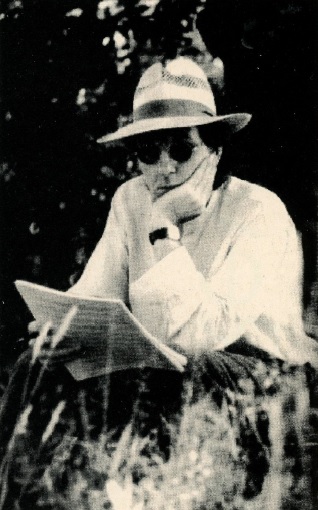
Colin Towns, having recently scored "The Puppet Masters", discusses his interest in free jazz and writing music with jagged edges. He regrets that so many movies follow the same musical formula. He has written music 'for himself' through his Mask orchestra.
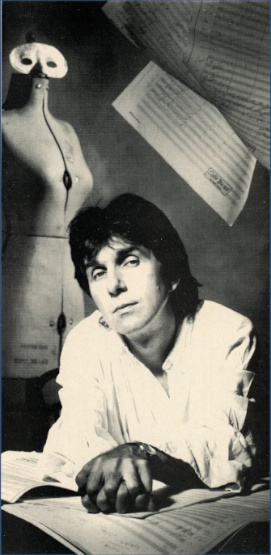
Colin Towns’s career is one of the busiest and most diverse of any composer working in Britain today. During 1994 he has scored a variety of television series including “Chillders” (Yorkshire Television), “Pat & Margaret” (BBC), “Sin Bin” (BBC), “The Dwelling Place” (Festival), “Brother Cadfael”, and “Pie in the Sky”. Towns was in Hollywod earlier in the year scoring Disney’s “The Puppet Masters”, as well as a number of television commercials in Britain. If all that wasn’t enough, he also found time to complete a new jazz recording with his Mask Orchestra. The hallmark of all this work is its consistent variety and quality. I spoke to Colin just before Christmas while he was working on a major costume drama for the BBC, “The Buccaneers”.
I began by asking Towns about his score for The Puppet Masters, one of the years best, available on Citadel CD. In the CD booklet notes, Towns refers to the great science-fiction scores that have been written in the past. What scores was he thinking of? “‘Alien’ by Jerry Goldsmith; that’s an incredible score. What I don’t like are the contemporary science-fiction scores because they all seem to be doing the same thing, the deep drones and the clinks. It’s like everyone has discovered the same toy for the last five years.”
“The Puppet Masters” represents one of Colin Towns’s few excursions to Hollywood. Not surprisingly, he had to contend with a temp score. “The music editor was Ken Wannberg, the John Williams guy. We talked about this and it seemed an easy film to put a temp track on, if you take individual scenes and find particular pieces to fit, but overall it didn’t work at all. They had lots of problems with the temp score, and I kept saying don’t worry and in the end I just steamed through it. I thought there was nothing to lose and I certainly was not going to copy John Williams.”
Vision Thing
Towns was in unfamiliar territory with an unfamiliar team. “That’s how it started out, but we ended up recording it over here and with a team I was comfortable with. If you know what people are looking for and you have the same vision as the director, you know where you are aiming for. I wasn’t too put out by the people over there.”
Fortunately, Towns was given a good deal of creative freedom by the director Stuart Orme. “Stuart trusts me a lot, not that he leaves me to it, we talk through what I’m doing all the time, but he gets very excited if I’m taking him somewhere he hasn’t been before and that’s great. If a director comes to you with an idea I see it as my role to honour the opinion, but at the same time surprise them. Anyone can just put music to a picture, but you have got to keep looking somewhere else.”
The Puppet Masters is an exciting and mesmerising score. It features a great deal of electronic sounds and effects. Unlike many composers today who like to record synthesizer parts together with the orchestra, Towns prefers to lay the electronic parts down first. “The thing about live is that I am a great believer in total control. There are all sorts of things that sound simple enough, but you may need to play around with them a bit and you don’t have that luxury live. In the main I didn’t let the musicians hear the electronic parts. I only played them that stuff back when we were certain that the orchestra was down right. Then I would play it back in the control room complete so that the producer and the director could see it working. I couldn’t put the stuff down after because we didn’t have the time to do that. There were quite a lot of electronics, mostly samples; I don’t use synthesizers. When I planned to record out in the States, I’d gone to see a guy called Mike Fisher who specialises in electronic percussion and noises. He came up with the sound and when we recorded it over here I paid him to use this sound as a starting point. I had some stuff of my own and went a million miles from that original sound, sort of spinning sound. I used a lot of choir effects. So when mixed all together you get a claustrophobic sound; if you could hear the blood rushing through your head, it’s that kind of sound.”
Pushing Drama
“There are a lot of orchestral effects, but I am a great believer in melody. Melodies are crucial for pushing drama; just listen to Bernard Herrmann on a good day. It is endless what you can do with an orchestra. I am doing a costume drama at the moment and I have to write as many melodies as I can come up with. Even that, you can push and give some sort of weight.
“I get so tired. I buy a soundtrack and you hear the same thing over and over again, and now with people copying temp scores it’s even worse.”
Towns’ music for “The Puppet Masters” is very wild and off-the-wall. It does seem sometimes that Hollywood composers are afraid to take risks and write musically challenging scores. “There is a lot of pressure to conform almost. Whether money plays such a large part, I don’t know. I think it is very sad that there is this great idea that working on American pictures is everything and it’s not. There is more to life than having your name on a big poster. What does that mean? Sometimes they do fantastic things. Over here we don’t have those sort of budgets, but you can pick up some things in television drama that are invigorating. I don’t want to wake up every morning with the nightmare of someone wanting me to copy a temp score. I can’t see it, going over the same ground all the time.”
Music and Money
Towns recently began work on the major BBC drama series for 1995 “The Buccaneers”. The 1994 BBC flagship, “Seaforth”, had a large orchestral score, a rarity for BBC productions. Interestingly the composer was French (Jean-Claude Petit) and the orchestra German (Munich Symphony). Will Towns have a similarly large orchestra for his series?
“What happened on ‘The Buccaneers’ – there is a Musician Union fund. I didn’t know it existed. Philip Saville had decided that a reasonable amount of money would be spent on the music. So I’m not doing too bad. For the first part we had 40, and for the rest of them we are using 30, which isn’t bad. In the end, although I complain about budgets, sometimes when you only have a few players you can beef it up if you are careful. We can’t as a nation stand and moan that all these jobs are going abroad. If you are trying to do the best job for the production and if you can get a better deal in Germany, go.”
Does Towns believe that it is regrettable that British composers have to work abroad, given that British musicians are generally considered superior? “It depends how you look at it. If you go over there with the feeling that you don’t want to go there you can make life difficult and say ‘look I told you so’. I’ve been there twice, and took some pretty fierce stuff, but if you work on it and get a good relationship going, you will get what you want more or less. True enough, if you record in London you have got the pick of the cream and that’s the ideal. If you haven’t got the ideal, you have got to think how you are going to achieve it. If you are someone like Jerry Goldsmith you can pick and choose, as he usually has the biggest of budgets.
After “The Buccaneers”, Towns moves onto a second series of the successful “Pie in the Sky”. “It’s very lightweight television but has some very good actors in it. I enjoyed it. The people are very nice and the second series is even better. “Our Friends in the North” is not going to appear until 1996. It is written by Peter Flannery who wrote ‘Blind Justice’. He’s a great playwright. It’s about a group of people from the ‘60s and we follow them through into the ‘80s. One becomes an MP., one drops out etc., a bit like ‘Boys from the Blackstuff’, ‘90s style.”
No Surprises
As well as film and television music, Towns has another passion; jazz. During 1994 he formed The Mask Orchestra and their debut recording was a critical success. “It’s not a new venture in as much as it’s jazz, big band twisted on one side. It’s not film music. The whole idea of it was to get out and play. I started out in jazz, and I just have a big passion about things that are missing in jazz. There are big things missing and the reason is that everyone has gone quite polite, and jazz has almost gone back to the modern jazz of the late ‘50s and early ‘60s. All the surprise has gone, for me. The electronic stuff is quite interesting but it still isn’t pushing as hard as it used to. It’s not free jazz necessarily, but heavily written stuff. We had the CD out this year, at the beginning of the year and it got good reviews. We got nominated for Awards and stuff. We are going to take it out in March for the first batch of dates. It is quite difficult to get people to entertain a band that big, far easier a quartet or something. You have got to make as big a splash as possible.”
The Mask Orchestra does contain one piece of film music, from the Working Title Production “Smack and Thistle”. “I kept on for ages saying I was going to do this band and my wife kept saying, ‘You have got to do more of your own stuff; you are always writing for other people’. When she died I set about doing that. That was a film I was writing when she died, and she quite liked the little tune.”
Towns’s list of credits is lengthy, and it includes dozens of commercials. “I don’t do that many now. All I have done this year is Renault and Ford. I used to do them because I got to know people in advertising. I was very lucky, not getting sucked into the awful end of the advertising. I worked with Richard Longcraine and Terry Bedford. I had to finance the Mask Orchestra myself, so I have to do jobs to cover it. We have got some Arts Council money for the tour. I like to balance it between things that are earning money and spend it on things that I can experiment with.”
Towns was pleased that “The Puppet Masters” received a CD release, one of the first from the newly-formed Citadel label. “I met Tom Null when I was out there and he was a nice guy and did a pretty good job. It is a calling card. I would hate to be in the situation where people put out every tiny little thing you do. Some composers are in that situation and some of it is awful.”
Bootleggers
Unfortunately that wasn’t the only CD of Towns’s music released during 1994. Another joined the wave of bootlegs sweeping the soundtrack community. “That’s an illegal show reel that someone is trying to sell. That’s very naughty. The reason I can’t do that is because it costs too much to pay the musicians. I put the thing together for someone, and the next thing I know they’re selling it for £25.00, the cheeky bastards.”
Whilst Towns has no plans to move to Hollywood, I’m sure we can look forward to him scoring more American films. In the meantime, Towns will no doubt continue to compose some of the finest and eclectic music for British film and television.
Towns’s score for The Puppet Masters is, as I have said, available on the Citadel label (STC 77104) TT:50:11. Mask Orchestra is available on the Jazz label. It’s a double CD. Should you have difficulty obtaining it, write to The Jazz Label, PO Box 5, Derwentside, Co. Durham, DHS 7HR. Finally, Towns’ latest release is his score for “Full Circle: The Haunting of Julia”. This is coupled with his Trumpet Concerto for String Orchestra and 1930 Cityscope. This is available on the Koch Screen label (3-8703-2H1).