Originally published in the Swedish magazine Movie Score. Nilsson discusses how the rules of film composition change from film to film. Whereas he wrote a traditional symphony for "Pelle the Conqueror", "The Best Intentions" used only a brief piano motif. He believes in using live musicians wherever possible, rather than computer samples. He says that film music is a means of paying bills and not a true ambition.
It’s almost impossible to be really experienced as a film composer. All those rules you made in your latest movie are never usable in your next project. These words come from Stefan Nilsson, one of the most important Swedish film composers today.
From the beginning he didn’t have any plans on composing film music, but not he is one of the cleverest. “Pelle the Conqueror”, “The Best Intentions”, and the films based on Sjöwall Wahlöö’s crime novels about Martin Beck are some of Stefan’s latest assignments.
Despite, or perhaps thanks to, his distanced relationship to film music, Stefan is Sweden’s most prolific and sought-after composer in both commercial and serious moves today. We meet Stefan at his home in Mälarhöjden, Stockholm. He lives with his family in an older yellow villa, surrounded by a tired garden with knotty trees. At the door we’re immediately confronted with the family’s dog, a jolly little fellow who welcomes us with his warm nose. Stefan is busy speaking on the phone; he’s probably discussing a job with someone. He doesn’t work only with film music – he’s also a respected freelance musician.
“If you are a freelance musician in little Sweden, you have to be interested in working with different kinds of music. You have to accept any assignment you’re offered; have to be ready for new tasks and take every job you can get.”
Lots of Concerts
To the public Stefan is presumably most well-known for his film music, but he’s also a regular guest at Swedish concert halls. For instance, he would often do church concerts with acclaimed singer Tommy Körberg (lead man of musical Chess). “I think that being out in churches together with different choirs – and to meet the live audience – is very important for my film compositions,” Stefan says. The fates to film music opened when Stefan had issued his first records, entitled “It’s Not Until Now I will Begin”. Directors heard his music and felt that his style was the ultimate for their movie.
Stefan is from the north of Sweden, born 1955 in Toredalen, Lapland. We ask him standard question number one: How did his musical career start?
“I used to play kettles and pot-lids, wanted to be a guitarist, listened to Elvis and played my sister’s records over and over again. During the 1960s I started listening to Beatles and got a new idol: Jimi Hendrix. The more I listened, I began to appreciate more physical music, in one way or another. Meanwhile, I started listening to jazz – Erroll Garner and Swedish duo Hansson and Karlsson.
Free and Spontaneous
Free and spontaneous music was something tasty for Stefan during his musical explorations as a youth. And Jimi Hendrix has always remained a big hero for Stefan.
“He made a very strong impression on me. There was some kind of incredible honesty in his music. It’s the same with, for example, the music of Béla Bartók – you can’t ignore any detail of it. If you do that, the instinctive stamp completely disappears.”
Stefan played his music without notes until he was 17, when he attended music school in Pitea, where he stayed for three years. He became one of the members in a group called Kornet, where he and his pals played jazz, fusion, and rock in a typical 1970s style.
“But at the same time I studied classical music, and I became familiar with the great composers such as Chopin. I studied piano for two years at the Royal Academy of Music.”
As a composer, which is Stefan’s main profession today, he actually has no education.
“I have been able to learn this bit by bit when playing the piano – an exploration of the possibilities. All of my film music composing during the 1980s has been a long school for me.”
Well, if the last decade has been a school for Stefan, he has been a very talented and successful pupil. That’s a fact that many directors have understood. Hans Alfredson was one of the first to discover Stefan.
“To come from my first movies, to Hans’ team felt as being part of a new world. He is immensely fun to work with. In Hans’s films you don’t need demos. He almost always knows what kind of music he wants. He jumps back and forward, singing tunes and themes. Then I have to be perceptive and write everything down. After this, I can work on my own – a fantastic freedom, as well as a big pressure.”
“False as Water”, a thriller from 1988, is a milestone in both Hans’s and Stefan’s careers – an unexpected detour from the usual comedies and dramas. Stefan wrote chilling music of odd quality. He used female solo voices, something that influenced the film’s atmosphere considerably.
“I had to underline the agony felt throughout the pictures. I almost felt sick after that experience.”
The collaboration with Hans Alfredson was very important for Stefan. But there is another great director who has discovered his talents – Bille August.
“When I began working with Bille, I came across an entirely new way of thinking. Here we had good people who took their life and work seriously. Bille approves of accuracy and honest discussions, something I believe is his biggest quality – he can see everything as a whole, and says directly to you what he wants.
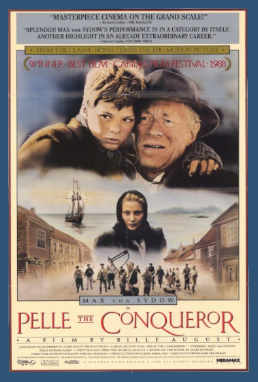
“Pelle the Conqueror”, which was their first collaboration, became an enormous success. It won the Academy Award for Best Foreign Film, and Stefan’s music – written for an orchestra mainly consisting of strings, piano, and woodwinds – was released on record by Milan.
A few years later, Bille August directed “The Best Intentions”, based on legendary Ingmar Bergman’s self-biographical screenplay, and Stefan was again hired to compose the music.
“Bille was very strong when he accomplished this project. And the idea he had was splendid. He wanted to do a slow, Nordic film, opposed to the MTV-influenced films of today. Here the music had an important role, and compared to “Pelle the Conqueror” had more delicacy.
Simple Piano Motif
The theme from “The Best Intentions”, a simple but very effective piano motif actually consisting of only two small notes, became, after a while, a natural thing for Stefan and Bille.
“When I wrote the music, I felt that these two notes should be developed more, but when the film was edited it became more obvious how self-evident this motif was. They simply suited the film perfectly.”
The film was performed by the Swedish Radio Symphony Orchestra under the baton of Esa-Pekka Salonen. The orchestra was bigger than what is common in Swedish film music. The strings were performed by 50 musicians, and the score became one of the most emotional composed for a Scandinavian film.
Instead of recording the music with a steady level, the music was written very quiet. “And with such a big orchestra the sound became very peculiar and subtle,” Stefan explains. The end credits contain a melody different from the main theme. It’s a more broadly orchestrated piece, which has obvious influences from Swedish folk music.
“Bille and I shared the opinion that the end credits needed some other kind of music to sum up and close the story. There is completely new music developed during the end credits.”
Bille August has recently directed his first major international film, “Hose of Spirits”, but this time Stefan didn’t get the job. German film composer Hans Zimmer was hired instead. There is some bitterness in Stefan’s voice when he tells us about the film.
“Bille wanted me, but there is so much business around when it’s an international film people had put millions into. The single most important thing for them is that it must pay off.
“The production was partly German, and they wanted to take care of a few things on their own. In spite of the fact that Bille wanted me to do the music, they hired a German composer instead. I was involved in the project for a long time.”
No Taste
We ask him what he thinks about Hans Zimmer’s music, and he’s not afraid to be honest with us.
“I didn’t like it. It was too butterish. It felt as if somebody had tried to cook a nice meal without being able to bring forward the right taste – and desperately continued to add spices, trying to make it up.”
Stefan Nilsson always calls for bigger live orchestras when he composes film music. He is one of the few Swedish film composers who always tries to get living instruments and musicians into the score. Bjorn Isfalt, for example, writes quite a lot of his music on synthesizers, as well as Ulf Dageby and Bjorn J:son Lindh.
“I would never accept to replace real instruments with sampled sounds. I only work with synthesizers when it’s functional, with sounds you can’t produce from a real instrument.”
Lately, Stefan has been busy composing the music for the six films about Martin Beck, based on the crime novels by Sjöwall Wahlöö. The quality of the films has been very variable, but “Roseanna” and “The Man on the Balcony”, both of them actually directed by Hans Alfredson’s son, Daniel – were pretty good. Stefan wrote two themes meant to be used over and over again throughout the films. The Martin Beck theme is a sentimental melody.
Swedes are Afraid
I discussed this with the editor, Darek Hodar, who meant that we Swedes are too afraid of being sentimental, while the Americans are too obvious. “I felt that the theme for Martin Beck could – and should – be sentimental. There are strings added in the end of the theme,” says Stefan. From the beginning, Stefan wasn’t hired to do the Martin Beck films – a German composer got the assignment first.
“But he wrote some kind of synthetic Wagner stuff, which the Swedish producers didn’t like at all. I got the job instead.”
The other theme composed for the Martin Beck films is a suspense motif on high strings. In the beginning of “Roseanna” this adds a very strong feeling to the story, when a young girl is found murdered in a lake. Even if most of the music is used several times in the films, there have been some sequences that had special music: for instance, the opening sequence of “The Police Murderer” where Stefan actually used synthesizer.
“I felt this was the right sound for the youngsters who meet at the amusement park in the beginning.”
Inspiring Ekman
Gösta Eckman, who is the leading actor of the Martin Beck films, is no new acquaintance for Stefan. They had previously been working together with the comedy “Peas and Whiskers”, which was directed by Ekman.
“Gösta is very inspiring. I have always said that film is a symbiosis of different forms of art, where somebody has to be a strong leader. And there is only one person who can do this: the director. Gösta is such a person, as are Hans and Bille. To use ragtime in ‘Peas and Whiskers’ was actually an idea which came director from Gösta.”
As a contrast to the serious works, there have also been some comedies for Stefan. After three films with Bengt Palmers – principally a record producer, script-writer and a long-time television personality – director and Actor Lasse Aberg decided to hire Stefan for the fourth film about odd character Stig Helmer Olsson, “The Involuntary Golfer”.
“Lasse is very aware of the importance of music in films. He gave me a record with Mark Knopfler to give me some guidance. I composed music which should be both comic and influenced by Irish folk music.”
Test His Skills
Another comedy, an early one for Stefan, was “The King of Smugglers”, which wasn’t very well received by critics nor by the audience, but gave Stefan an opportunity to test his skills.
“It was a fun project where I wrote ‘old-Swedish’ film music for orchestra. That film was a part of my ‘school’ during the 1980s. I learnt a lot – to work with an orchestra and try different orchestrations. I think that is what I’ve learnt the most: to minimize the orchestrations, not to over-work it.”
Stefan is very sparse when it comes to brass in his orchestrations. He often uses strings, piano, and woodwinds.
“It’s difficult to use brass in Swedish movies. In my movies there has been no space for music with those instruments. They demand quieter orchestration and greater delicacy. But of course I would like to do something big.”
We ask Stefan if he’s like to work more internationally, where he could compose more full-blown symphonic music; for example, in the fantasy, adventure, or science fiction genres.
“Well, I’ve been thinking about putting some kind of presentation together for this purpose. Of course, it’s a dream to score a really big movie. A film like ‘The Abyss’, which had some very good music by Alan Silvestri – choir and a big orchestra – would definitely be very nice to be a part of.”
Close to Directors
Stefan’s relationships with directors are mostly very close. They spot the films carefully together.
“Often, it’s more important where a cue starts or ends, not how it sounds. In ‘Pelle the Conqueror’ and ‘The Best Intentions’ we used this a lot – to have a cue started a little bit later than one would expect. Film music has always been a musical genre which hasn’t been really accepted, especially not as music for the concert hall. But something has happened lately. People seem to be more and more interested in film music. I think that the quality of film music has been better recently, and surely there is a lot of film music that should be performed in the concert halls. John Williams’s music for “E.T. The Extra Terrestrial” and “Star Wars” is fantastic, for instance.”
Some of Stefan’s music has been performed in concerts. After the success with “Pelle the Conqueror”, he gave a series of school concerts together with Helsingborg Symphony Orchestra, where he explained how film music is created. His music from “Pelle the Conqueror” is frequently performed by different orchestras in Sweden.
Stefan’s latest film is a comedy by the Swedish crazy-humour ensemble Lorry. The title is “Yrrol”, and Stefan promises that this will be something really special for the Swedish film audiences.
“I have never seen anything like it. I’ve written a theme, which is meant to be a bit crazy but also flexible. The film begins in Greece, and I use instrumentation to get the right feeling. But the same theme has to work, for example, as a Finnish tango. Of course, I’ve been working with clichés, but I have tried to be as serious as possible. I think that will enhance the comedy furthermore.”
“As an example of how seriously-composed music can enhance a comedy, we discuss “Hot Shots Part Deux” and “The Naked Gun”.
“It works damn good. But you have to use the clichés in a deliberate way – otherwise you’re on thin ice. And in films as “Pelle the Conqueror” and “The Best Intentions” I have definitely not worked with clichés. That music is developed from my own depths.”
Examination
Stefan thinks of “The Best Intentions” as one of his most important experiences, and after the ‘school’ during the 1980s in different genres it felt as some kind of examination for Stefan. Now, he feels quite experienced in the film music business.
“But you always discover new problems, and every film is new and different. You learn from your own mistakes. I don’t want to be regarded only as a film composer. I think that theatre and opera, for example, is important too. The reason for my works in the movies is purely a matter of surviving. But during the process of surviving, you’ve got to try to have some fun. However, when you are working with film music, you can’t be too experimental. This is something I can do when I’m out there, playing for real audiences in the concert halls.”
Although Stefan has done about 20 films, there has not been much of his film music released on records. But there is a compilation CD of his music planned to be released in 1996.
“I will assemble mostly themes I’ve composed for different films.”
Finally, we ask Stefan if he has got any favourite in film and film music history. There is no hesitation before he answers:
“‘The Godfather’. It’s my favourite. The trumpet tones in the beginning… It’s done in a masterly way. And as a film it’s a rare effort: an artistic and commercial hit at the same time.”