On "Mary Shelley's Frankenstein". Doyle discusses an instance of how he is using surround sound technology in the film. He avoided looking back at other musical scores for the Frankenstein story and chose to write something original instead.
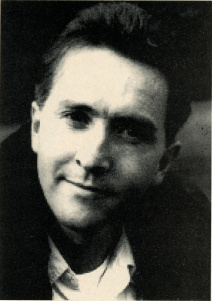
Photograph by Sophie Baker
Delighted that his Shepperton office is gradually being tailored to his comfort, Patrick Doyle smiles a great deal after the completion of “Mary Shelley’s Frankenstein”. A “great believer in wood”, we talk about the new furnishings that are on the way, and lead into reminiscences of an acoustic phenomenon back home in Scotland. ‘Big wood’ apparently throws a great many ‘hellos’ back at you from your first, thanks to a natural formation unimpeded by deadening or dampening ground.
“Can I call this ‘From Big Wood to Hollywood’?” I ask. Tongue bitten, we turn to the fourty cinematic collaboration with director Kenneth Branagh. Arguably his largest score to date, “Frankenstein” had a core writing period of about two-and-a-half months commencing in June. “In total, I had about 18 months’ thinking time. Some advance musical requirements brought me in very early on. There is a grand ballroom sequence, and part of the ‘haunting’ love theme played on solo recorder.” These were in fact prepared before the New Year, yet despite their use on set this will be the first joint venture in which Doyle does not make an appearance in the film. An editing decision to which he has but two words: “Thank God!”
Though he is partly where he is because of an acting background, that aspect of his talents is evident quite finished with. Music is now precisely where he gets his kicks. When we talk of the temp track’s contribution to the film’s development, a small side-track ensues. We rack our brains for what instrument produces a desired effect original for “Indochine”, then again for the ‘creation’ sequence in “Frankenstein”. With the sheet music in front of him, Doyle effortlessly relives the writing experience and performs the piece in a series of ‘da-dums’ and ‘chloomps’. It was the woodblock we were thinking of, but before that links us back to the root growth obstructing the drains at his home, I obtain some specifics.
Surround-Sound Effects
All the regular team seems to have been at the recording sessions: conductor David Snell, orchestrators Lawrence Ashmore and John Bell, editor Roy Prendergast, and music supervisor Maggie Rodford. A mix of session musicians ultimately made up the largest orchestra he has used, with notable large viola and horn sections. On the subject of horns, there is an effect carefully planned that makes seeing the film in a cinema with surround-sound preferable. “There is a balcony sequence with three trumpets on each side that performs a back-and-forth fanfare that is sequenced into a flowing circle of sound.”
A great deal of thought has gone into the technical possibilities, with Mr. Branagh exercising varying degrees of influence over the mix of sounds. In one cue, he adamantly felt that the use of a tenor drum would give the “deeper percussive quality” he wanted. The working relationship seems to improve with each picture, as one would hope, and puts their understanding of requirements more closely in sync.
Fresh Approach
Discussions for the requirements took place well before filming, and one thing Doyle avoided doing on principle was researching the story’s wealth of cinematic history. This fresh approach to material is something that has brought the composer recognition before. The trend of a new take on an old character was a success for Francis Ford Coppola and James V. Hart in their last collaboration. Very much in the same vein (excuse the pun) as “Bram Stoker’s Dracula”, this year’s creature feature throws the creative bunch together for something deserving success, and a rest before the next.
“I do enjoy having as much time as possible on projects, with breaks between.” A break during the ‘thinking time’ for “Frankenstein” had him retreating to a sexual fantasy island. The recording sessions for “Exit to Eden” were apparently riotous at the sight of Dan Ackroyd in S&M gear. Adapted from one of Anne Rice’s saucier novels, the film blends diamond smuggling with bondage. Director Gary Marshall hopes it “will make you laugh and get you aroused”. When able to keep the musicians under control, Doyle attempted to “keep the score straight for the most part, weaving in an espionage theme and an almost Latin-America feel for the baddies.”
When finished, he speedily returned to Shepperton and his homely hut for the main thrust of Frankenstein’s musical creation. As he worked, an extra consideration occupied him. By thinking in terms of flowing cues together, he has added another suite to a possible future concert adaptation of his work. Though he strongly feels his job is to work to a picture’s needs, he also believes the music should stand on its own. “At this stage I still feel any concert performance would be icing on the cake.”
The next slice to be baked for possible decoration will be “The Little Princess”. Despite this being his third film this year, in addition to an adaptation of King Lear, he is astounded by his contemporaries’ output. This will be the richest year of his own work, and since the volume is unlikely to decrease, it looks as if his closet carpentry leanings will have to wait a while.