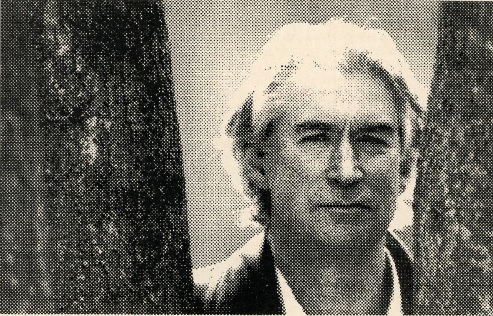
Burgons briefly discusses his TV hits and some of the dramatic and political challenges he had tangled with.
Recently a picture of Julia Sawalha appeared on the cover of Radio Times with the heading “How Do You Follow ‘Middlemarch’?”. BBC's period serial was a big hit earlier last year, and with the new Charles Dickens novel being adapted on BBC 2, naturally concern was whether this new adaptation would be as successful. No need for concern as it soon became apparent that it would soon top the charts on BBC 2.
It should be said from the start to those who missed its initial run that there are very few sympathetic characters in “Martin Chuzzlewit”. Treachery, jealousy, envy and murder abound, a fact not lost on producer, Chris Parr when he read the novel. “It's the story of a family split by greed which, is the very opposite for the ‘caring’ ’90's. There is a strong moral thread running through it, with characters falling either side of the divide between good and evil depending on how they react to the prospect of getting their hands on old Martin Chuzzlewit's money.”
The difficult task of adapting Dickens’ novel to the screen fell to David Lodge. An established writer in his own right, his earlier novel Nice Work was screened on BBC 2 a few years ago and was enhanced by a quite remarkable score by Colin Towns. Says David Lodge, “People love to be entertained and ‘Martin Chuzzlewit’ is full of wonderful comedy which, I hope, will be its main joy on screen. It's also got some strong melodramatic scenes and a murder story which gathers pace, so there's suspense and mystery too. There's narrative surprise – the audience is kept wondering what's going to happen next, though we are quickly told who is good and who is bad, who's corrupt and who's innocent.”
Lynda Bellingham, one of TV's most familiar faces thanks to “All Creatures Great and Small” and ITV's comedy “Second Thoughts”, plays Mrs. Lupin, Landlady of the Blue Dragon, one of the nicest of characters in the series. “‘Martin Chuzzlewit’ is about selfishness in all its forms, and the only two people who are really open – apart from Tom Pinch who's the absolute epitome of goodness – are Mrs. Lupin and her young man Mark Tapley. Mark and her are almost the only really happy characters in the story, so it's rather nice amidst all the chicanery to be honest, round and buxom.”
As with “Middlemarch”, the choice of composer would be of crucial importance. Christopher Gunning provided the music for Middlemarch, utilizing original themes by the late Stanley Myers. For “Martin Chuzzlewit”, producer Chris Parr chose award-winning composer Geoffrey Burgon, who had previously worked with Parr on BBC's “Children of the North”. Burgon of course also scored Dickens's “Bleak House” in 1988, starring Denholm Elliot and Diana Rigg.
I first asked Geoffrey Burgon how his approach differed on “Chuzzlewit” compared with his previous foray into Dickens. “Very much so actually. This is much more operatic, much more extreme. Some of the characters are quite grotesque, almost monstrous. There are only really two nice characters in it, namely Tom and Mary, and they have the only innocent sort of music. I approached it as an opera. I had about three months to do it. There is about two-and-half hours of music altogether. Apparently the viewing figures for the first few episodes were better than ‘Middlemarch’ so I am very chuffed about that.”
Before “Martin Chuzzlewit”, Burgon scored the Hugh Grant/Sam Neil hit “Sirens” only to find all his efforts ended up on the music editor's floor. It finally was released with a score by Rachel Portman. “It was just one of those things. It happens to a lot of us, as you probably know. Both the director and producer liked my score a lot and it was the Australian producer who I think was mainly put out because she had not been consulted about the composer. She discovered that I had been asked to write the score before she had even been consulted. She went to the dubbing predisposed not to like it. It ended up at the preview with hardly any music on it so, by the time it got to the distributor, it was decided to go ahead with a new score. It is the first time it’s happened to me. Before that I did ‘A Foreign Field’ with Leo Mckern and Lauren Bacall for BBC again. That was nice because Charles Sturridge, who I worked with on ‘Brideshead Revisited’ especially asked for me to score it.”
Whereas “Martin Chuzzlewit” Is the latest score, what, I wondered, was the very first assignment? “My first TV score came through a recommendation by Wilfred Josephs in 1979. It was for a BBC production of Somerset Maugham's ‘The Letter’. I later worked on some ‘Doctor Who’ stories. The budget allowed for four instrumentalists, but with doubling and the use of the Radiophonic Workshop, I got quite a large and varied sound. One of the scores was rather mystical, as I remember.”
Geoffrey Burgon has worked on many occasions with John Irvin to great effect, most notably on an adaptation of John LeCarre's “Tinker Tailor Soldier Spy”. Although a prestigious production and subsequently released on BBC video on two cassettes, there was, I seem to recall very little music in the series. “Music was used very sparingly in ‘Tinker Tailor’. This was the choice of John and myself, I think. It seemed to be the right way to approach the programme, but in general John gave me a very free hand. I believe that it was my idea to use the boy soprano, but it was John's choice of text. I believe he had been a chorister himself and knows the liturgy well. After ‘Tinker Tailor’, I next worked with John on an adaptation of Frederic Forsyth's ‘The Dogs of War’. I was a bit shocked when I first saw a rough cut, as I did not know what to expect. But the film gave me great scope for using a wide variety of orchestral colour, and I enjoyed working on it for that reason.”
In 1979, Geoffrey scored the controversial “Monty Python's Life of Brian”. “The score of ‘Life of Brian’ was meant to be homage to Hollywood epic scores, but I did not have any particular score in mind. There are also lots of quotes from classical music including Monteverdi, Mozart, and Wagner. Terry Jones left me alone at first, but later got me to write some of the cues differently. He is the only director with whom I have had a serious disagreement of the approach to a score. I wanted it to be straight Hollywood epic, whereas he wanted a sort of Keystone Cops music in places.”
Anyone who has been lucky enough to see the 1979 version of Vera Brittain's autobiographical novel “Testament of Youth” cannot have failed to be moved by the total waste of a generation lost during the Great War. It also contained a beautiful central performance by Cheryl Campbell as Vera. When she was on, the whole screen lit up by the inner glow that she brought to the character. It seemed too that Geoffrey Burgon was moved by the story for which he produced one of his finely-crafted scores. “I enjoyed ‘Testament of Youth’ too. I listened to a lot of English music of that period before starting work on that score to try and capture that period accurately. George Butterworth particularly I seem to remember."
For years that music was lost, buried on the soundtrack and stored at a vault at the BBC. It took the most enterprising of British record companies, Silva Screen, to record a near-ten-minute suite from the series, together with “Brideshead Revisited”, “Chronicles of Narnia”, “Bleak House”, and “Tinker, Tailor, Soldier, Spy”. Thankfully still available, I asked Geoffrey if he was happy with the recording. “l was actually, very pleased. It was done on a shoestring during three sessions over just one day.’
One couldn't talk to Geoffrey Burgon and not mention “Brideshead Revisited”. I must admit, I couldn't immediately take to the series as it was unlike anything we had seen at that time. This was an adaptation taken at a very leisurely pace, so that all the novels’ detail could be taken in. Geoffrey Burgon's music made an immediate impression, though, and was released on a Chrysalis LP with beautiful fold-out sleeve and colour booklet. It was subsequently reissued on compact disc, though now sadly deleted. “I had to work very intensively on ‘Brideshead Revisited’, and wrote it all in about three months, including the orchestration. There is over three hours of music in the series and almost none of it is repeated, literally. The orchestra was about 26.”
1994 saw the release of “The Fall of Lucifer” [Silva Screen Label], a performance of the Trumpet Concert at the New Hall, Basingstoke, and a brass band piece performed during November at the Guildhall, London.
We started with “Martin Chuzzlewit” and it's apt that we should finish there. The music is released on compact disc [DMUSCD 107 Destiny Records] and anyone interested in Geoffrey Burgon's music will certainly want to avail themselves of this stunning disc. I wondered If Geoffrey was pleased with the end result, considering time was short in bringing it out. It was actually released whilst the series was still being shown. “It’s using the original tracks; it hasn't been re-recorded. The quality we got at the sessions was incredibly high; marvelous playing and it came off incredibly well. It was actually very hard to know what to leave out because we chose some 58 minutes and out of two-and-a-half hours; it was difficult to choose. I could have easily done 70 minutes; but in the end, I just had to make a selection. I just didn’t have the time. I had to work very fast.”
Be it 58, 70 minutes, whatever, I can thoroughly recommend this CD, a very worthy addition to Geoffrey Burgon's ever-growing discography. Like many composers before him, Geoffrey Burgon has always divided his time between the media and his non-filmic works. We are extremely lucky in this country to have some fine composers, touched by genius who have not thought of writing for the cinema as writing down or beneath them. So we have fine scores by Ralph Vaughan Williams, William Alywn, Sir Arthur Bliss, Alan Rawsthorne, and Benjamin Frankel, to name just a few. We should also be very grateful that Geoffrey Burgon continues that fine tradition, for his works belong with the very best that the composers mentioned above have given us over the years.