Arnold got his break into the film industry through his buddy, David Cannon. He has quickly ascended into star status with "Stargate", which is a throwback to the epics of the '50s. Arnold prefers big, bold symphonic scores and scores his pictures in this vein. This article was written when Arnold was still attached to "Cutthroat Island".
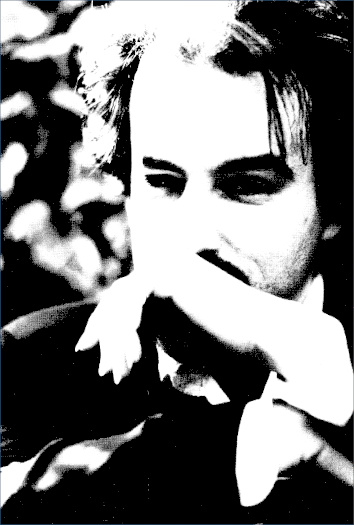
Few composers can claim to have had such a spectacular film scoring debut as David Arnold. The big break, both musically and cinematically, usually comes after several films. David Arnold, however, has hit the big time with just one film: “Stargate”.
You could be forgiven for thinking this is just a one-off, but David has just finished scoring “Last of the Dogmen”, and has already begun work on “Cutthroat Island”, the mammoth pirate movie directed by Renny Harlin. The person most surprised by this leap to stardom is the composer himself. After all, it wasn’t too long ago that David was selling fireworks and working on a building site.
I spoke to David while he was recording his score for “Last of the Dogmen” with the London Symphony Orchestrain London in December last year. David is extremely down to earth, quietly spoken but not afraid to give an honest answer to an honest question. You couldn’t fail to be impressed by his sincerity and genuine surprise at finding himself at the centre of so much attention. However, David is not about to back his bags and move to Hollywood, nor is he ignorant of the not always pleasant politics of movie scoring.
The first part of David Arnold's journey is perhaps not that unfamiliar. “It was always music. I went through the usual route, starting with the recorder at school. You blow at one end and move your fingers. If you can do that you ought to be able to do something else so I moved onto the clarinet. I learnt the basics of music theory and took that to grade A. Then it was guitar, which I discovered was a far more exciting proposition than the clarinet. I began playing in bands and writing music and songs for the first time. At the same time I was playing in military bands and orchestras as well, at school and at college.”
David first became aware of the cinema when he was seven through the James Bond films, particularly “You Only Live Twice”, which remains one of his most favourite scores. He also remembers being amazed by the music for “The Wizard of Oz” and “The Omen”. Big commercial films with big commercial scores, just the kind of music David Arnold loves, and he is not ashamed to admit it.
David's interest in the cinema developed when he began taking part in the activities of his local Arts Centre, and began working with another aspiring young man, Danny Cannon. At this time David was jostling with several different jobs; “I was selling fireworks, working on a building site, the most horrible things you could think of. What I tried to do was to work for two or three weeks, and then spend two or three weeks writing. I never had any money, but I kept my expenses down so I could work for little money. We were making films quite frequently. It was here I found that staying close to the production helps you understand the medium in which you are working. I could see the whole filmmaking process from finding the location, to writing, to shooting, to recording and to cutting.” These tough days gave David a wealth of experience. He favours a hands-on approach rather than rigid academic application, and has a broad understanding of film making techniques.
In many ways, David's success has been linked to that of Danny Cannon. They started out together and have fought through together. “Danny did a film which was up for a BBC Film Award called ‘Sometimes’, which I did. It was a short video film and it won the overall competition. Alan Parker was one of the judges on the panel and he loved it, I think he saw what the potential was. He suggested that Danny go to film school which he did on Parker’s recommendation. I actually went up too, but I didn’t get in. I think they tended to specialise in more academic musicians and because I hadn't done a Royal College degree and even though I was reading and writing music I didn’t make it. Also, part of the examination for film school was to score one of their ten-minute shorts. I didn’t think much of it and scored it from start to finish. They asked me why I did it, and I said it was because it needed it. It’s quite funny but because of ‘Stargate’ they offered me an Honorary Degree. They said I was the best competition winner they never had. I don’t mind though. During that time I scored a lot of, well all of Danny’s work and a lot of other student's work as well. I was also doing a lot of other work too, studio work, which was all very useful experience.”
David actually scored more than twenty film school films in a little over two years, including “The Protagonist”, “Ignorance is Dancing”, and “Play Dead” for Danny Cannon. Their last film together at film school was for Danny’s graduation, Strangers. “It was shot in America in Los Angeles, which was frowned upon at film school. I went over to Los Angeles to see the shooting and recorded the score at Angel in London. It turned out very well and I went with a very commercial sounding soundtrack, because that was what I was interested in.”
The success of “Strangers” led to David's first big score for Danny's first big film, “The Young Americans”. “Danny had the script idea for ‘The Young Americans’ and went to Cannes to find some money and eventually did with Polygram. They weren't keen on me scoring it because there was so much money at stake and it was Danny’s first big film, but Danny showed them some of the stuff that I had done and they went for it. That was the first very big score that we did. It was a very dark, sombre piece. It was a very low-budget film really and we didn’t have much money for the music. We had to score the whole film in two sessions, but I am used to working with nothing, so all of a sudden to have something is quite incredible.”
“The Young Americans” was to provide just what was needed to propel both Danny Cannon and David Arnold on to much bigger things. For David it would be “Stargate”, which is one of what I thought were three very tenuous connections that David has with Jerry Goldsmith. The first is that “Stargate” is directed by Roland Emmerich, who directed “Moon 44” which was scored by Goldsmith's son Joel. The second is that “Cutthroat Island” was to have been directed by Paul Verhoeven, in which case Goldsmith would probably have scored it. The third is that both David and Goldsmith’s names have been connected to the up-and-coming “Judge Dredd”, directed by Danny Cannon. “There is a fourth more direct connection! I went down to the studio where I wanted to record ‘The Young Americans’, Whitfield Street, and Jerry was in there scoring Matinee. He of course is a huge hero of mine. I rang up the producer of ‘Matinee’ and said I was a first time composer, blah blah, and wanted to hear what the room sounded like and could I come in and sit at the back? I got in the very last session and sat in the back of the studio. When it was all finished somebody introduced me to Jerry, saying ‘This is David Arnold, an aspiring young composer’. As soon as he said that it was like, bang! Everything switched off and he completely blanked me!”
For “Stargate” David immersed himself in every aspect of the film's production. Thorough research into the rhythms and cadences of traditional Egyptian instruments and scale was supported by discussions with the filmmakers, director/writer Roland Emmerich, producer Joel B Michaels, writer/producer Dean Devlin, leading actors Kurt Russell and James Spader – in fact, just about as many members of the cast and production team as he could corner.
Many people have referred to the roots of the score for “Stargate” being in the style of “Star Wars” and the music of John Williams. “People are going to refer to John Williams because some of the orchestrations are certainly John Williams-influenced. He kind of established the blue-print of that genre of film. If you are making a big sci-fi epic, he pretty much wrote the book on what those scores sound like and so everyone has a frame of reference and the frame of reference is ‘Star Wars’. I mean, I prefer ‘Superman’ and ‘Close Encounters’ as far as his sci-fi work is concerned, but ‘Star Wars’ was epoch making and put its thumb print on the whole industry. The music for ‘Stargate’ is what it is, and if it sounds like something else, then so be it.
“One of the things that inspired me and Roland to get this thing together was that Charlton Heston said after a screening of ‘The Ten Commandments’ that they can’t make films like this anymore. Not that they won't, but they can’t, and Roland wanted to make an epic with big sets and that is exactly what he did. It’s a modern film, a high-concept action vehicle, but it could have been made in the ’50s or ’60s. I prefer to go back to the lush orchestrations with plenty of memorable themes and write a very bold score, not being afraid of standing up and being noticed. I mean, the film is essentially about people walking through amazing scenes, looking at things. There are probably only two or three scenes where people have conversations in this movie, a lot of it is looking at things we have never seen before.
“The film was originally three-and-a-half hours long. I wrote two-and-a-half hours of music and I think there is 90 minutes in the film. We were rewriting on the last day of recording. We were writing on the plane on the way back! Five days before we were due to come back to record the thing they changed 27 cues, so much that they had to be rewritten. The film was always being changed, because of these dangerous things known as preview screenings, where the screening audience opinion will make the filmmaker change his mind about something. It started out as something 3-and-a-half hours long and ended up being something which was two hours long, basically the same as the 3 hours version without the boring stuff. It went through four or five very radical structural changes. When a film costs $60 million then you do have test screenings and deal with the repercussions of that. It’s a war of attrition. Anyway, we recorded 90 minutes of music.”
David's latest assignment is “Last of the Dogmen”. “We recorded it at AIR. We probably approached capacity with Stargate in terms of how loud you can play. The room is very suitable for the very broad sweeping stuff that we recorded. I think the acoustics benefited ‘Last of the Dogmen’ as well. The score is as opposite as you can get from ‘Stargate’. Very rich, romantic, Americana influenced piece, all for images of the wide open west, the wilderness. It’s a much more mature score. After that there is a small British film called ‘Boston Kickout’. I’m doing it for a friend I've known for years and years, I think they are making it for £500,000. So I will be doing that in January.”
David has no illusions about his next major project. “‘Cutthroat Island, is going to be music by committee I am sure! We have got a big ballroom scene, in two weeks’ time, actually, and I'm doing some music for that at the moment, filming in Malta, so that should be quite good.”
David's other current projects include a collaboration with Shara Nelson on their co-written single ‘I Fell’. Produced by Tim Simonen, the single is due for release any time now, and will feature on Shara’s forthcoming album still in production for which David hopes to write a further song.
One film that will not feature on David’s credits is “Judge Dredd”. Jerry Goldsmith will be scoring it as rumoured. “Danny will certainly push him hard on it, because I know the kind of score that Danny’s looking for and it will be a hell of a job, but Jerry is one of the best. The whole background to that is a bit peculiar.” I was interested as to why David is not scoring it. The stories about the difficulties Danny Elfman had in being accepted to score “Batman” are well known. “It was never like that. I think if I wasn’t friends with Danny Cannon none of this would be happening. When they started shooting the movie, everything sort of turned ’round. Danny really fought hard, but when you are working in this industry and you have this amount of money at stake, things can change drastically. I mean I am not bitter about it at all, it’s just that at the end of the day Andy couldn’t imagine doing it without Jerry. He actually rang me up and said ‘I hope you don’t think that I'm doing this than for any other reason that the best for this film is Jerry Goldsmith as far as I am concerned, not that whether you can or can’t do it.’”
David has recorded all of his scores to date in London. “I think I would always prefer to record over here. There is one good recording studio over there, Sony, which hasn’t been touched for years, which sounds amazing. We have got the best studios, the best technicians, the best orchestras. There is something quite unique about the British orchestra. They are ferociously proud of what they do. They give you a tough time sometimes, but they are proud and their commitment to the performance shows way better than anything I have heard anywhere else.”
Although David has enjoyed more success with one film than some composers have in a lifetime, he still has an ambition to fill. “I'd really love to do a James Bond film. I'd love to do the song and I'd love to do the score. In a way that’s the thing that started it all off for me, and would complete the cycle so to speak.”